
Photochrome Camera Club

San Francisco Photography Club: Established 1942

Archive for July, 2011

SF-88L is the only NIKKE missile battery in the in the country preserved in its original appearance. Part of the battery is located underground with inadequate lighting for normal photography. Consequently, be sure to have a tripod or flash attachment handy. Volunteers are most willing to demonstrate the missile site systems. Besides photographing this cold war relic, beautiful lush green hills and coastal areas nearby offer photographic opportunities. You also might want to stop off at  the Marin Headlands Visitor Center to check out their exhibits and have coffee.
Directions: Traveling north on route 101, after crossing the Golden Gate Bridge, take the Alexander Avenue exit 442 (the second exit). Travel through a cut in the mountain, then turn slightly left onto Danes Drive that soon becomes Bunker Road and passes through a tunnel. After exiting the tunnel, continue west on Bunker Road for approximately 2.5 miles. You will reach a fork in the road. Veer to the left on Field Road. About 150 yards after the fork you will see the Marin Headlands Visitor Center on your right. Site SF-88L will be the first right you come to beyond the Visitor Center parking lot. It’s about a quarter mile up the hill to the gate.

Gary Larsen
Henri Cartier-Bresson - Mario's Bike

Henri Cartier-Bresson - Mario's Bike

Recent events remind me of a story that is legend on Flickr. A user uploaded this picture and entered it into a group called Delete Me. The idea of the group is that you submit your image and other members critique it and vote whether it is worthy of remaining in the group or not. Members enjoy being vicious and unforgiving.

The image quickly garnered a lot of critiques, few of them flattering:

When everything is blurred you cannot convey the motion of the bicyclist. On the other hand, if the bicyclist is not the subject– what was?

Why is the staircase so “soft”? Camera shake? Like the angle though.

so small. so blurry. to better show a sense of movement SOMETHING has to be in sharp focus

Nicely composed, but blurry

This looks contrived, which is not a bad thing. If this is a planned shot, it just didn’t come out right. If you can round up Mario, I would do it again. This time put the camera on a tripod and use the smallest aperture possible to get the best DoF. What I would hope for is that the railings are sharp and that mario on the bike shows a blur. Must have the foreground sharp, though. Without that, the image will never fly.

You get the idea; the general consensus was that the pictured was too flawed to be worth keeping in the group. The rub was the photograph is actually a famous image from Henri Cartier-Bresson (the father of modern photography) called “Hyeres, France, 1932″ which had just sold at auction for $265,000 and was considered by critics to be a great image.

So what’s the point? A smart ass Flickr user humiliated a bunch of pompous, wannabe photography critics? Maybe the point is that everyone has an opinion. Opinions about art are totally subjective: what sells well at auction might not go down as well in the amateur photography community. Right and wrong just different points of view. In our little community lets try to keep that in mind. We’re all here because we’re passionate about photography. You may not agree with your fellow club member but both your opinions are valid. Everyone’s opinion deserves courtesy and respect.

Here endth the lesson….

Stacy Boorn: Golden Napa Moment

Golden Napa Moment

Photochrome Exploring Photography Night and Photo Critique “Pic Two” from Field Trip

Open to members and the public
Program:
“Art on the Vine – Your Camera, Your Eye:
     tools for creative imaging in the vineyards.”
Presentation by Photographer Stacy Boorn
Stacy Boorn: Grape Leaf

Stacy Boorn: Grape Leaf

In the art of wine tasting there are basically six steps: use your sense of sight; then swirl, sniff, sip, spit and, finally, drive safely home. Just as there is an art to tasting the fermented juices, there is an art to seeing that which transpires on and around the vine.  In capturing the art of the vine the possibilities can be endless. But there are six invaluable techniques that are easily remembered in the acronym GRAPES: Get-in close, Reflectors, Aperture, Polarizer, Exposure and Spritz.

The program will also provide location details.  Suited for expert and beginning photographers alike.  This is also a good night to invite friends!  You may taste wine blindfolded to enhance your experience and ability to critique. But when you come go the wine country you must journey with eyes wide open!  The images you capture and create here will rival all others!

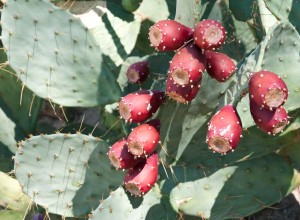
This 2.5 acre garden is located at 1552 Bancroft Road, Walnut Creek 94598. The focus is on water conserving plants with it’s 2,000 cactus, succulents, trees and shrubs from around the world. Admission is $10 for adult and $7 for seniors. Parking is at the office entrance at 1500 Bancroft Road. Tripods are allowed as long as they are set up on paths.

Here are a few tips on photographing plants: Try to find some unique perspective to make the composition more interesting then just a catalog photo. How about including wasps, bees or any king of crawling critters. Try different depths of field by shooting at several aperture settings. Use a diffuser to eliminate harsh sunlight. Fill a frame with a single flower, leaf or plant for more detail as opposed to including too much background that may be distracting. In other words, try different techniques that may capture the beauty of these plants.

Gary Larsen

July 30, 2011
10:00 amto2:00 pm
July 21, 2011
7:30 pmto9:30 pm
Stacy Boorn: Golden Napa Moment

Golden Napa Moment

Photochrome Exploring Photography Night and Photo Critique “Pic Two” from Field Trip

Open to members and the public
Program:
“Art on the Vine – Your Camera, Your Eye:
     tools for creative imaging in the vineyards.”
Presentation by Photographer Stacy Boorn
Stacy Boorn: Grape Leaf

Stacy Boorn: Grape Leaf

In the art of wine tasting there are basically six steps: use your sense of sight; then swirl, sniff, sip, spit and, finally, drive safely home. Just as there is an art to tasting the fermented juices, there is an art to seeing that which transpires on and around the vine.  In capturing the art of the vine the possibilities can be endless. But there are six invaluable techniques that are easily remembered in the acronym GRAPES: Get-in close, Reflectors, Aperture, Polarizer, Exposure and Spritz.

The program will also provide location details.  Suited for expert and beginning photographers alike.  This is also a good night to invite friends!  You may taste wine blindfolded to enhance your experience and ability to critique. But when you come go the wine country you must journey with eyes wide open!  The images you capture and create here will rival all others!
Stacy Boorn: Grapes on the Vine

Stacy Boorn: Grapes on the Vine